Why we start with live power
The scarcest part of an AI factory isn’t the GPUs. It’s the megawatts behind them. So we begin where the power is already on.
For most of the last decade, the hard part of building compute was getting the chips. That has changed. Today the limit on how fast new AI capacity comes online is power: finding it, connecting to it, and delivering it to a single rack that can draw as much as a row of servers once did.
Vertical’s answer is simple to say and hard to do. We don’t start with an empty field and a request to the utility. We start with sites where the power is already live, and buildings that already stand, and we build the AI factory into them.
The constraint moved
A large new connection to the grid is a long process. The utility has to study the load, plan the upgrades and schedule the work, and in many regions the grid is already carrying a long backlog of projects waiting to connect.1
None of that is a criticism of utilities. They are being asked to plan for demand growing faster than anything they have seen in a generation. But it means the calendar for a greenfield AI site is set by the grid, not by the builder. The chips arrive, and wait.
The fastest megawatt is the one that’s already connected.
Live power, existing buildings
Instead, we look for sites with live power: energized capacity, an existing relationship with the utility, and substation equipment to match. Often they come with industrial buildings that were designed for heavy loads in the first place: tall, wide-span, and on strong floors.
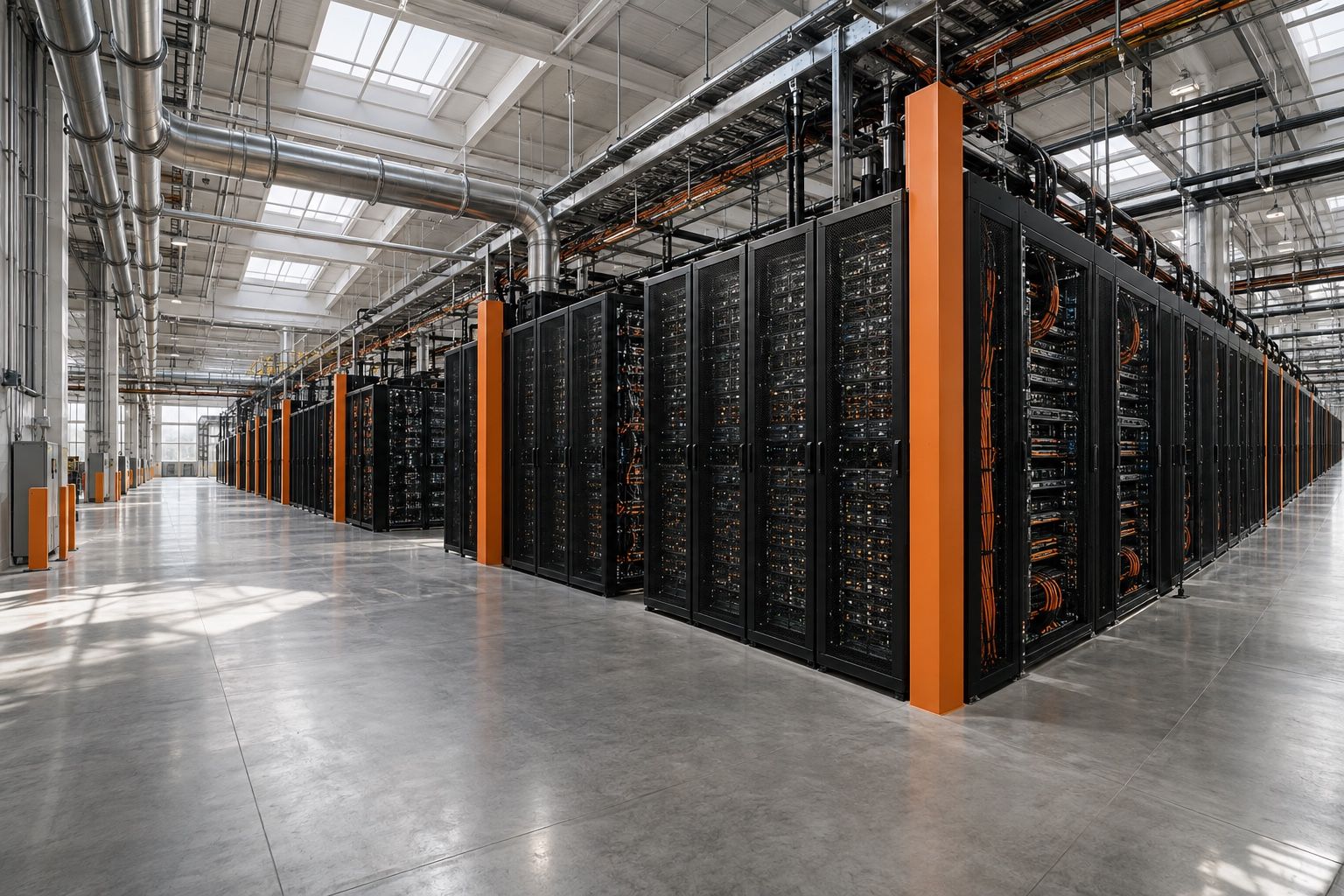
An existing building is not a shortcut. It has to be surveyed, strengthened where needed, and fitted with cooling that was never part of its original design. But it swaps the longest items on a greenfield schedule for work we control.
What it changes
Starting from live power changes the whole plan above it.
- Time to first rack. The schedule is set by fit-out and delivery, not by a connection date years away.
- Known capacity. We design the hall around power we can measure today, not a forecast.
- Cooling first. Dense GPU racks need liquid cooling. Retrofitting it is the main engineering job, so the building is planned around it.
- One operator. Power, building and cluster are run by the same team, so a problem at one layer is never someone else’s ticket.
Here’s how the two approaches compare on the items that set the calendar.
| Item | Greenfield site | Live-power site |
|---|---|---|
| Power | New interconnection, studied and built | Energized, upgraded where needed |
| Building | Designed and constructed | Existing shell, surveyed and refitted |
| Cooling | Designed in from the start | Retrofitted: the main engineering task |
| Critical path | Grid connection | Fit-out and equipment delivery |
What it costs us
The trade-off is choice. Sites with live power and a usable building are rarer than empty land, and each one is different. There is no reference design we stamp out; every hall starts with a survey and ends with drawings of its own.
We think it’s the right trade. Customers don’t buy a building. They buy a cluster that’s running, on a date they can plan around. Starting with live power is how we give them that date.
- 1
Lawrence Berkeley National Laboratory’s annual Queued Up report tracks the backlog of generation and storage projects waiting to connect to the US grid.